Abstract
AI is transforming how open source software is built, who contributes to it, and how scholarly work gets done—but the open source community is still working out what that means in practice. This panel brings together researchers, educators, and industry practitioners to examine AI’s impact on open source from multiple angles: the empirical evidence on how AI-assisted contributions are being evaluated by maintainers, the practical challenges facing UC researchers trying to use AI tools in reproducible, open scholarship, the infrastructure questions that determine whether open source AI is even a viable option, and what decades of community building can tell us about where we go from here.
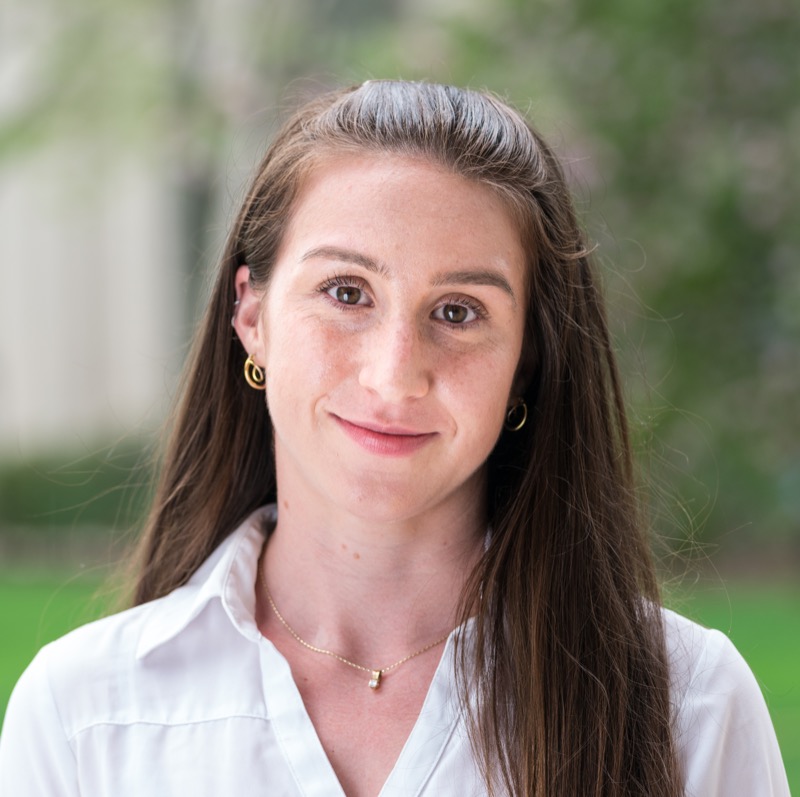
Leilani Gilpin | UCSC (Chair)
Leilani Gilpin is an Assistant Professor in the Department of Computer Science and Engineering at UC Santa Cruz. Her research focuses on the design and analysis of methods for autonomous systems to explain themselves. Her work has applications to robust decision-making, system debugging, and accountability. Her current work examines how generative models can be used in iterative XAI stress testing. She holds a PhD in Computer Science from MIT, an M.S. in Computational and Mathematical Engineering from Stanford University, and a B.S. in Mathematics (with honors), B.S. in Computer Science (with highest honors), and a music minor from UC San Diego.

Fernando Perez | UC Berkeley
Fernando Pérez is Associate Professor of Statistics at UC Berkeley, Faculty Director of the Berkeley Institute for Data Science (BIDS), and a Faculty Scientist at Lawrence Berkeley National Laboratory. He created IPython in 2001 and co-founded Project Jupyter, now one of the most widely used open source scientific computing environments in the world. He co-leads the Eric and Wendy Schmidt Center for Data Science & Environment at Berkeley, co-founded 2i2c (International Interactive Computing Collaboration) to provide open infrastructure for science and education, and is a founding member of NumFOCUS. He is the recipient of the 2024 NASA Exceptional Public Service Medal, the 2024 White House OSTP Champions of Open Science recognition, and the 2017 ACM Software Systems Award. His research spans interactive computing, open science, and AI-based tools for scientific discovery, with a focus on climate, environment, and health.

Sahiba Chopra | UC Berkeley
Sahiba Chopra is a fifth-year PhD candidate in the Management of Organizations group at UC Berkeley’s Haas School of Business, advised by Professors Mathijs de Vaan and Abhishek Nagaraj. Her research examines how AI tools are reshaping collaborative work—specifically how they disrupt the social evaluation processes through which people assess and coordinate with one another in organizations. Her dissertation introduces “effort opacity theory,” which explains why AI-generated contributions face systematic evaluation penalties even when their quality is comparable to human work. She combines large-scale computational methods, causal identification strategies, and controlled experiments in her research, and is herself an active participant in the open source ecosystem through GitHub hackathons and her own public repositories.

Marit MacArthur | UC Davis
Marit MacArthur is a continuing lecturer in the University Writing Program at UC Davis, where she has taught composition, professional writing, and American literature for 20 years. Her work on AI and writing is grounded in a decade of interdisciplinary research on open source speech recognition tools, funded by the NEH, ACLS, and SSHRC Canada—giving her an unusually deep understanding of both the open source and the pedagogical dimensions of AI. She is a Principal Investigator on PAIRR, a $1.5 million California Education Learning Lab project spanning UC Davis, three CSUs, and four community colleges, and a co-investigator with the NEH-funded Center for AI and Experimental Futures at UC Davis. Her research has appeared in AI & Society, Computers and Composition, and Inside Higher Ed, and she serves as series editor for the journal Critical AI on GenAI and writing in higher education.

Tara Hernandez | MongoDB/UCSC
Tara Hernandez is Vice President of R&D Productivity at MongoDB and a UC Santa Cruz Computer Science alumna (1993). She is one of the original pioneers of continuous integration, having built CI tooling and managed the Netscape Navigator development team before helping prepare the original Mozilla codebase for public release—a foundational moment in open source history. She subsequently held engineering leadership roles at Pixar, Linden Lab, and Google (where she oversaw Kubernetes developer tools and Google Cloud Platform learning content) before joining MongoDB in 2022. She has been a board member at a number of non-profits related to open source and inclusion in tech. At UC Open she will speak to how AI is reshaping open source community building, onboarding, and contribution—drawing on decades of experience sustaining open source ecosystems inside major technology companies.