Abstract
By utilizing open-source principles, we have developed the Environmental NeTworked Sensing (ENTS) platform for developing wireless sensor networks for environmental and agricultural applications. ENTS is an open-source project developed at UC Santa Cruz, consisting of field-deployable sensor hardware and web data visualization tools for monitoring uploaded data. ENTS provides a reliable and secure core for handling wireless communication, power management, and data storage. The overhead (monetary, time, and maintenance) can be reduced when deploying new sensor applications by writing small applications utilizing these core components.
We share our experiences with growing the platform from a single-purpose system into a full wireless sensor network platform. Over the past four years, it has grown from a single developer to a full-fledged open-source project. We have successfully facilitated contributions from within UC Santa Cruz, other UCs, and external collaborators across the globe. The project has enabled research experiences for UC undergraduate students and students participating in Google Summer of Code through the OSPO office. Additionally, we discuss co-design experiences with domain science experts that have been enabled through ENTS open-source structure. We have been able to effectively extend the platform to specific research use cases to allow for continuous remote data collection. We hope to continue extending ENTS capabilities to make an impact on the research community.
About the Speakers

John Madden
John is an Electrical and Computer Engineering PhD student at UCSC. His research intersects novel low-power energy sources and wireless sensor networks. He is the maintainer of the Environmental NeTworked Sensor (ENTS) project which he uses to study energy harvesting from soil microbial fuel cells and prickly pear cacti. He is passionate about open-source projects that have real-world use cases in environmental research and agricultural communities. He received his B.S. in Robotics Engineering from the University of California, Santa Cruz in 2020.

Colleen Josephson
Colleen Josephson is an Assistant Professor of Electrical and Computer Engineering at the University of California, Santa Cruz. Her research focuses on sustainable wireless communication and sensing systems, with applications in agriculture, environmental monitoring, and climate resilience. She leads the Smart Sensing Lab (“jLab”), where her group develops open-source, low-power platforms that integrate novel communication techniques, energy harvesting, and adaptive networking to create resilient infrastructure for the natural world. In addition to her faculty role, Dr. Josephson is Co-Director of the UCSC AgTech Alliance and holds an Agronomist appointment with UC Agriculture & Natural Resources. She is also an Associate Editor for IEEE Transactions on Agrifood Electronics and serves on the steering committee for ACM HotCarbon, helping shape the research community at the intersection of computing and climate. Her broader work emphasizes open designs, right-to-repair principles, and iterative co-development with agricultural stakeholders to ensure that technology serves community needs. Before joining UCSC, Dr. Josephson earned her Ph.D. in Electrical Engineering from Stanford University.
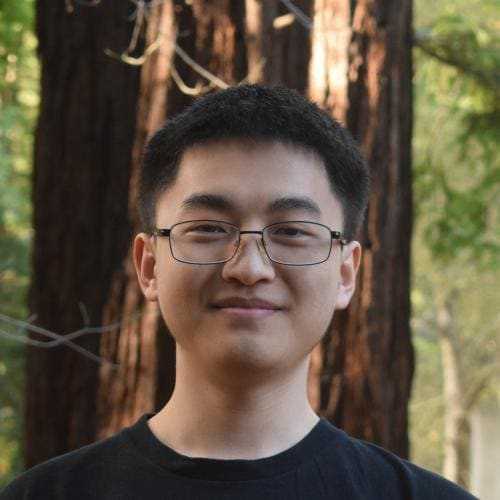
Jack Lin
Prior to his work as a staff researcher in the jLab, Jack received his M.S. in Electrical and Computer Engineering at UC Santa Cruz. His current research focuses on developing robust visible light communication and radio frequency backscatter for low power wireless sensors targeting applications such as precision agriculture. In addition, he develops embedded firmware to support multiple ongoing projects in the lab. He also has a strong interest in teaching and mentoring.
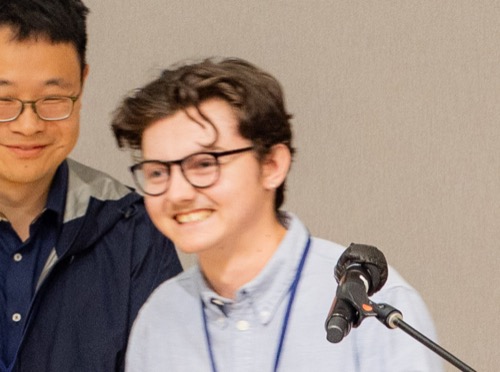
Alec Levy
Alec is a 3rd year undergraduate Computer Engineering student at UC Santa Cruz. He is working on developing the ENTS Backend that helps researchers monitor sensor data from microbial fuel cells. He was recently awarded the 2025 Research Pathways Fellowship, and is continuing to work on Soil Microbial Fuel Cell (SMFC) sensing research.