Abstract
The late philosopher Jürgen Habermas identified the public sphere as the discursive space in a free society, located between private life and the state, in which individuals form public opinions through reason-based interactions. Ideally, deliberation in the public sphere underwrites the legitimacy of a democracy, although this ideal is distorted as discourse in the public sphere is mediated through communication technology. In this talk, I will begin by discussing how the open source movement, which is founded on reason-based collaboration, helps to advance democratic legitimacy of the technology-mediated public sphere while private development can undermine it. I then apply this framework to open source AI and set out two paradoxes. First, I show that even closed-source (proprietary, blackbox) AI can improve the quality of the public sphere when it is integrated in responsible practice with open source platforms designed to improve synchronous and asynchronous discourse at scale. Second, I show that even open-source AI (such as models from AI2 and the social good computing envisioned in the Cal Compute initiative) does not necessarily lead to AI models that improve discourse in the public sphere.
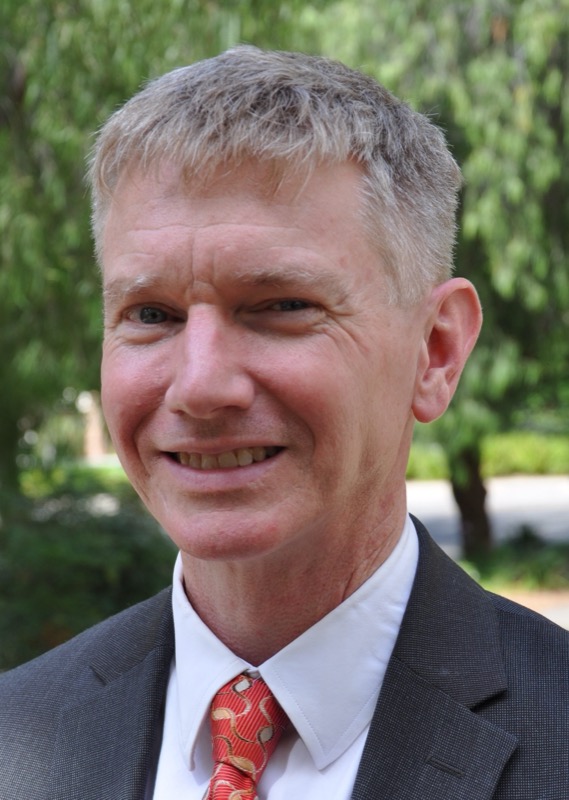
Kevin Esterling | University of California, Riverside
Kevin Esterling is professor of Public Policy, professor and chair of Political Science, and the Director of the Laboratory for Technology, Communication and Democracy (TeCD-Lab) at the University of California, Riverside, and affiliate of the UC Institute on Global Conflict and Cooperation (IGCC). His research focuses on technology for communication in democratic politics, and in particular the use of artificial intelligence and large language models for understanding and improving the quality of democratic communication in online spaces. His methodological interests are in artificial intelligence, large language models, Bayesian statistics, machine learning, experimental design, and science ethics and validity.