Introduction
Open source software (OSS) is ubiquitous in academia, just as it is ubiquitous in every layer of our digital lives. It’s been estimated that 94% of companies use open source software, all major programming languages are available in open source implementations, and as you read this document right now, you’re using OSS, too. The remarkable success of OSS, however, belies a crisis under the surface. A large proportion of open source maintainers are overworked, underpaid, and battling burnout, even those who are maintaining projects with great utility. Academic open source maintainers are no exception--surveys show that the majority of research software contributors lack sufficient funding to support software development activities for their research (Carver et al. 2022), and that they believe the most useful support a university could provide for their software development work would be grants for sustainability (Scarlett et al. 2026). Addressing this crisis on a global scale will take time, but there are things that you can do now to strengthen your project’s financial and social future.
This playbook is for contributors, creators, and maintainers of academic open source software (OSS) at the University of California. We’ll discuss the strategies that UC OSS projects have used to sustain success, ways that UC was a partner on the journey, and some ways in which UC is still catching up to the fast-moving world of OSS. Hardware creators will also find useful content here, though the focus is on software (hardware creators may want to also check out https://
Various definitions of open source sustainability have been proposed (e.g. OSAOS, Daniel Katz, SustainOSS), but the gist of them is this: a sustainable project is a living thing, adaptable, persistent, and resilient to challenge or uncertainty. As technology and user needs evolve, a sustainable project resists obsolescence, and either stays relevant or grows increasingly useful to a community of users and contributors. This playbook is designed to help you cultivate a sustainability mindset–keeping an eye out for opportunities, and making time for activities with long-term payoffs.
A sustainable project is a living thing, adaptable, persistent, and resilient to challenge or uncertainty.
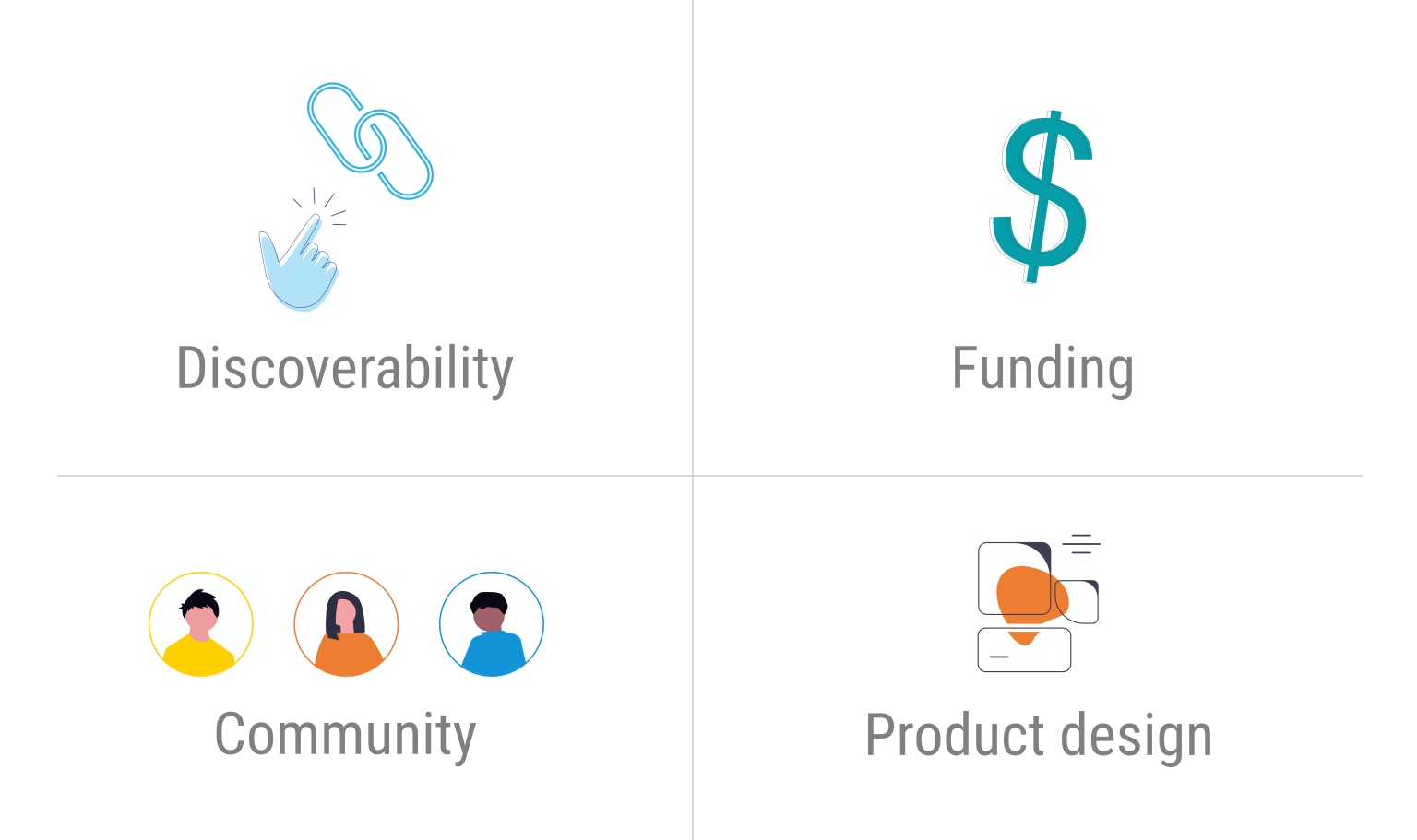
Many academics may understandably feel that sustainability means funding. However, plenty of well-funded projects have fizzled out, and plenty of scrappy projects have achieved remarkable success. In OSS, as the saying goes, money isn’t everything. We offer a holistic approach to sustainability, inspired by the four facets presented in the It Takes a Village Guidebook by Lyrasis:
Discoverability: Provide records that will make your software easier to find and use.
Funding: Consider five mechanisms for funding for academic open source: sponsored projects; gifts; non-profits and fiscal sponsorship; entrepreneurship; and institutional funding.
Community: Build a welcoming community to fuel innovation, recognition, and trust.
Product design: Encourage community contributions by building a codebase that is designed to be modified.
Academic open source creators are a diverse group. To reflect their varieties of experience, we interviewed UC researchers who have found innovative ways to sustain (or thoughtfully sunset) their OSS at UC, and incorporated the interviews into this book as quotes, anecdotes, and ideas. Abridged transcripts of the full interviews are available in the appendix. Sustaining OSS at UC may feel daunting, but you are not alone. There are other researchers who have navigated these hurdles already, and we’ve collected their stories here for you.
What’s inside
This playbook is divided into the four facets described above. The funding fact is further divided into five sub-sections, making that section a bit longer than the others. Towards the end, you’ll find an overview of UC departments that can help with OSS sustainability. This section will be especially useful for those who are not familiar with the departmental acronyms we use throughout this handbook (TTO, SPO, OR, etc.). Finally, the appendix contains abridged transcripts from the interviews, released with the interviewees’ review and approval.
Disclaimer
The content provided in this playbook is for informational and educational purposes only and does not constitute legal, financial, or administrative advice. While the UC OSPO Network Project is hosted at the University of California, the views and information expressed herein are those of the project team and do not necessarily reflect the official policies, positions, or regulations of the University of California or its administration.
The descriptions of university offices (such as Sponsored Projects, Strategic Research Initiatives, etc.) and their workflows are based on the authors’ research and understanding. This content has not been officially reviewed, approved, or endorsed by the specific offices mentioned. University policies and procedures are subject to change; researchers should always consult directly with the relevant administrative offices for the most current guidance and to ensure compliance with university and funder requirements.
Related resources

Looking for more resources similar to this playbook? Check out these related works.
A collection of resources on Open Source Hardware in research, teaching, and practice, from the perspective of UC experts; includes talks, interviews, and reusable materials for open source hardware projects.
An open-source, community-driven handbook on how to make data science reproducible, ethical, collaborative, and accessible for everyone.
A handbook on growing and sustaining open source software projects. Created and curated by GitHub, along with input from community reviewers.
CHAOSS (Community Health Analytics in Open Source Software)’s Practitioner Guides contain advice for maintainers and practitioners about assessing and strengthening open source project health.
SustainOSS is a community dedicating to supporting open source maintainers and the health of open source projects. They have several active and archived podcast series on OSS sustainability.
It Takes a Village from Lyrasis
A practical guide for OSS sustainability, rich with case studies and interviews, geared toward open-source software projects serving cultural and scientific heritage organizations.
A handbook with reflections from open source leaders, created during a hackathon in 2018.
- Carver, J. C., Weber, N., Ram, K., Gesing, S., & Katz, D. S. (2022). A survey of the state of the practice for research software in the United States. PeerJ Computer Science, 8, e963. 10.7717/peerj-cs.963